

E-Bikes Aren’t The Same As The Bikes You Rode When You Were A Kid
I’m sure the New York Times article over the weekend about e-bike injuries has caused a few arguments to erupt. Haven’t we heard of the many benefits of e-bikes — their energy efficiency, their eco-friendliness, the way they get people out of cars and exercising? Yes, those assets are not to be discounted. But what’s missing in many of the conversations about the popularity of e-bikes is the fact that they are quite different from the pedal-it-yourself bicycle you had in your youth.
And don’t we need to do a bit of self-reflection? Many of us had to forego our middle adult cycling years in favor of long automotive commutes and work hours. We lived in climates that weren’t suitable for e-biking for over half of the year. Some of our rural locations didn’t offer wide enough roads for two cars and bicyclists at the same time. Now we’re in retirement years and communities, but those changes don’t necessarily mean that we’re ready to ride an e-bike safely.
An e-bike is more like a moped or a scooter than a traditional bike. Cyclists who choose to ride e-bikes need to think of them as a largely separate mode of transportation. And some of the suggestions that follow aren’t going to sit well with casual e-cyclists.
How to be Safer on an E-Bike: A List of Suggestions
Please, please, please put on a bike helmet as soon as you mount your e-bike. Yes, it’s going to mess up your hair. Yes, it feels awkward perched on your head. Okay, it looks a little goofy compared to a sporty baseball cap or dapper safari hat. But a helmet can cushion your head in the event of a fall and save you from getting a concussion. And, yes, you need to wear it even if you’re just biking around your neighborhood.
Take an extra minute or two to adjust the gears before you take off. Your teenaged self probably didn’t even have mirrors on your bike; now you need to understand and be strategic using your bike’s gear system. Shifters vary based on bike type. Even when you’re familiar with how to select various gears, you need to think ahead to the terrain and slopes in the first few moments of your upcoming ride.
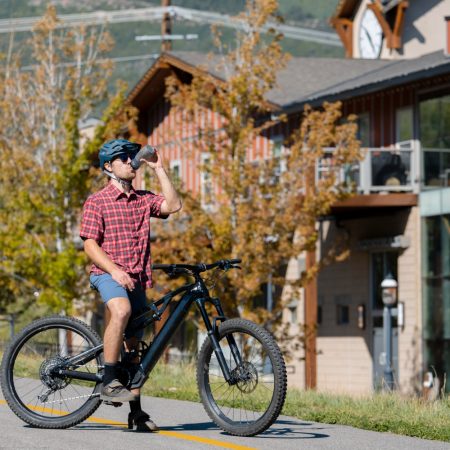
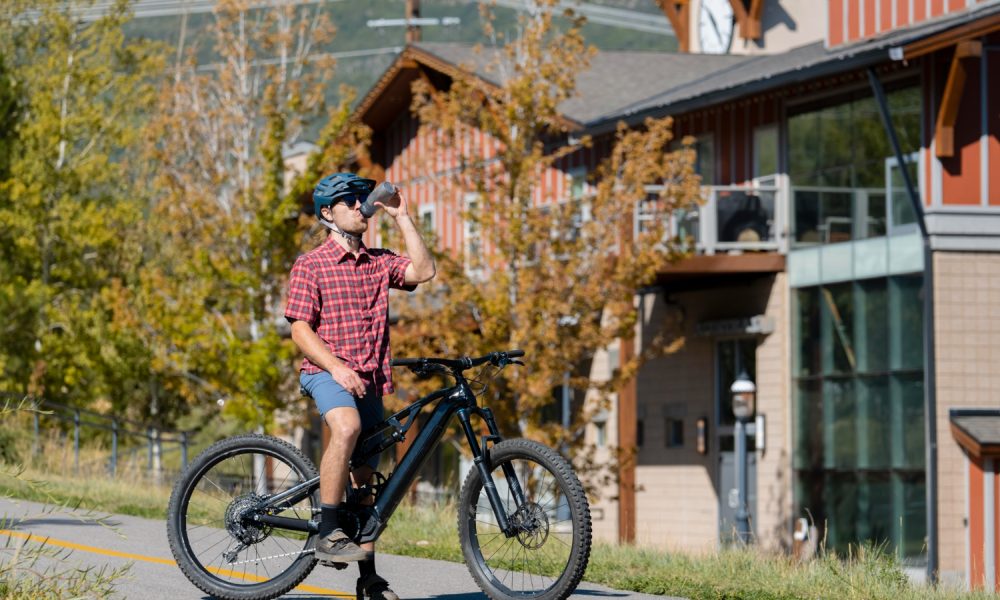
Get ready to ride. I close the snaps on my saddlebags tightly and double-check the bungie cords if I am carrying any item too big for the saddlebags. Then I mount the bike. I turn it on, choose my gear, and wiggle on the seat a bit to get good balance. Then I adjust the mirrors, look right and left, then right and left again, before I either start to pedal or pull on the throttle, which is one of two ways my e-bike engages pedal assist. I also note the level of charge I have, as it’s quite disconcerting to find yourself low on battery and having to pedal a heavy e-bike without assists when you’re far from home.
Be a defensive rider at all times during your trip — whether just around the corner or for a long trek. If you live in a gated community like I do, you may think that pedestrians have the right of way and that drivers will be sweet to e-bicyclists on the roads. Unfortunately, that deduction simply isn’t true. Automobile drivers tend to feel that they have the rights to the road, and you need to anticipate that they’ll crowd you in the bike lane (if there is one), cut you off at 4-way stop signs, or be looking down at their phones instead of seeing you. Did you ever notice how professional cyclists always seem to be hyper-aware? They have to be, or their physical health could be in jeopardy.
Follow the rules of the road to ensure your safety. As an e-biker, you have the requirement to follow all traffic rules. That means you need to stop at stop signs and red lights. Use turn or hand signals every time you are making a turn onto a new street. Activate your front and rear lights whenever conditions are darkening or foggy. Assess vehicles at intersections to determine if drivers consider you part of the traffic flow or a secondary mode of transportation that should defer to autos.
Set common-sense speed limits for yourself. An e-bike can buzz right along, but you need to be aware of the conditions of the pavement (pot holes, sand on pavement, drains, speed bumps) and the flow of traffic and pedestrians. Just because you can go fast doesn’t mean that you should. I won’t name them, but I know a handful of people who have been in fairly serious e-bike accidents. One was riding on a wide, two-lane road in the bike lane when the draft of a tractor trailer truck sucked them in. Another was the recipient of a vehicle backing up into the parking lot area in which the e-biker was pedaling. Without listing the accident details, let’s say that the e-bikers endured weeks of hospitalization and therapy, and their family members were very, very concerned.
Ride cautiously — for yourself and others on the road. The key to safe e-bike riding is predictability. Position yourself appropriately on the road. If you’re accompanied by a pal, ride in straight lines. Be clear to each other about your maneuvering and intentions. Try to eliminate sudden movements that might take your pals or other pedestrians and traffic by surprise. Being predictable means you’re more likely to be safe, as others can make logical assumptions about your e-biking patterns.
Maintain appropriate comportment for conditions. It’s not just higher speeds that make e-bike riders more susceptible to accidents than traditional bike riders. You need to be ready with the brakes (choose the back brake for most stopping needs; the front brake can force you to go ass-over-teakettle if used alone). Regulate your place in your lane based on traffic conditions, weather, and your surroundings. Generally, ride in the same direction as traffic. Be ready to react when you come upon uneven surfaces, as your e-bike weighs more than your former manual bike; the e-bike’s weight can make them more difficult to control on rough pavement, gravel, or other challenging surfaces.
Hopefully, these insider hints will help you to have many wonderful afternoons riding your e-bike. As grandma said, better safe than sorry.
Reference
- “The shocking crash that led one county to reckon with the dangers of e-bikes.” David Darlington. New York Times. November 30, 2025.
This post first appeared on cleantechnica.com
Other Articles

The Strange Time Compression of Sodium-Ion Battery Development
More US States Are Promoting Balcony Solar